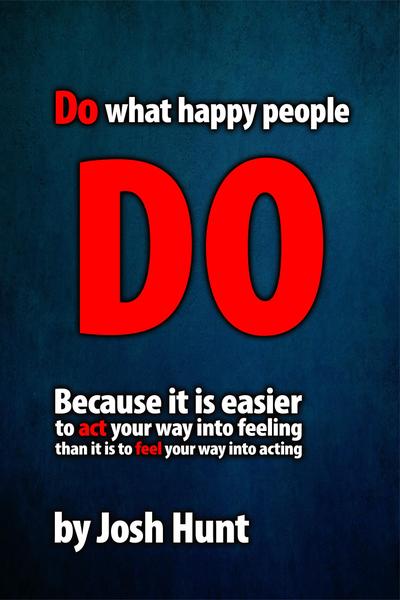
If you want to be happy, do what happy people do. That’s the heartbeat of this whole book. And one of the most consistent habits of happy people is this: they live connected lives. They spend time with others, they show up for people, and they stay engaged even when they don’t feel like it. When unhappy people pull away, happy people lean in.
John Ortberg provides a good summary of what we will explore in this
chapter:
We flourish when we are connected with God and people, and we languish when we are disconnected. Emotionally, isolated people are more prone to depression, anxiety, loneliness, low self-esteem, substance abuse, sexual addiction, and difficulties with eating and sleeping.
The Science of Social Connection
Decades of research confirm what our hearts already know:
relationships keep us alive and make life worth living. In 1979, two researchers—Lisa Berkman and Leonard Syme—set out to study how social ties affect health. They followed nearly 7,000 adults in California over nine years and discovered something stunning: people with strong social connections were three times more likely to still be alive at the end of the study. The loners didn’t just die younger—they were sicker along the way.
Even animals need community. John Ortberg
reports:
Physically, the destructive aspects of isolation are powerful. Even animals that are isolated experience more extensive arterial sclerosis than animals that are not isolated. A friend of mine used to have a dog and a cat, and the dog and the cat fought for ten years. Then one year the cat died, and the dog didn’t want to eat. Day after day the dog wouldn’t eat, until six weeks later the dog died. That is the power of connection.
More recently, scientists have taken this even further. A 2024 study in the Journal of Clinical Psychiatry found that people who reported feeling supported by friends and family had lower levels of inflammation in their bodies—the kind that causes heart disease, diabetes, and depression. The World
Health Organization now warns that chronic loneliness can be as deadly as smoking fifteen cigarettes a day.
When you’re down, you might feel like staying home, pulling the blinds, and watching another show. But happy people don’t wait to feel social before being social. They act their way into connection—and before long, their mood catches up. If you’re unhappy, do what happy people do: call someone, go to church, invite a friend to dinner. It works.
Winston Churchill was a wonderful
example of the power of connection and its effect on health. John Ortberg describes it this way:
We see the physical, life-giving power of connection in Winston Churchill. He had a wonderful marriage with his wife, was deeply connected to his family, his friends, his nation, and his work. His health habits were terrible. His diet was awful. He smoked cigars all the time. He drank too much, had weird sleep habits, was completely sedentary — yet he lived to be nearly ninety. Somebody asked
him, “Mr. Churchill, do you ever exercise?” He replied, “The only exercise I get is serving as a pallbearer for my friends who died while they were exercising.”
John Ortberg, The Me I Want to Be: Becoming God’s Best Version of You (Grand Rapids, MI: Zondervan, 2009), 185.
John Ortberg, The Me I Want to Be:
Becoming God’s Best Version of You (Grand Rapids, MI: Zondervan, 2009), 185.
John Ortberg, The Me I Want to Be: Becoming God’s Best Version of You (Grand Rapids, MI: Zondervan, 2009), 186.